Packaging for an Etsy Candle Business That Sells
A customer has already chosen your scent, your vessel, and your point of view. The moment their order arrives, your packaging for Etsy candle business determines whether that choice feels like a simple transaction or the beginning of brand loyalty.
For a candle founder, packaging is not an afterthought tucked around a finished product. It is the first physical expression of your brand in a customer’s hands. It protects a fragile vessel, sets expectations for the burn experience, and gives your collection a presence that can hold its own in an unboxing video, a gift bag, or a well-styled shelf.
Start With the Product Experience You Want to Create
Before choosing a mailer, tissue color, or box insert, decide what your customer should feel when they open the package. A warm, nostalgic candle line may call for soft neutral paper, tactile labels, and a quietly crafted finish. A modern, architectural collection may be better served by crisp white space, black accents, and a clean, structured carton.
This is where many Etsy sellers lose cohesion. They select a beautiful vessel, then choose packaging based only on what is inexpensive or readily available. The result may protect the candle, but it can make a premium product feel generic. Your packaging should extend the same visual language as the vessel, fragrance names, label design, and product photography.
Think in systems rather than individual supplies. If your glass candle vessel is offered in an ivory matte finish, consider whether the carton, seal, and insert support that restrained palette. If your collection uses rich amber glass and moody fragrances, a deep brown or charcoal presentation may create a more intentional frame. Permanent forms. Considered finishes. The details should appear to belong together.
Packaging for Etsy Candle Business Has Two Jobs
Every packaging decision needs to satisfy two requirements: it has to arrive safely, and it has to arrive beautifully. Neither can be sacrificed for the other.
Candles are unusually demanding products to ship. Glass can break. Lids can loosen. Wax can scuff or melt during warm-weather transit. A presentation box that is perfectly sized for a retail shelf may not be suitable as the only layer between a vessel and a carrier’s sorting equipment.
Build your system in layers. The innermost layer protects the candle’s surface and lid. A fitted insert, honeycomb wrap, or protective sleeve helps keep the vessel stable. The product box or branded carton presents the candle as a finished good. Finally, an outer shipping box with enough cushioning protects the full package from impact.
The most elevated approach is usually not the most elaborate one. It is the one with the fewest unnecessary movements. When a candle shifts inside its box, it is more likely to arrive damaged. When the product box floats inside an oversized mailer, even beautiful tissue paper cannot compensate. Choose proportions carefully, then test your packaging with the actual vessel, lid, label, and protective material in place.
Test Shipping Before You Scale
Order one of your own candles and have it shipped across the country. Better yet, send test packages to friends in different climates and ask for honest feedback. Did the lid stay secure? Was the label scuffed? Did the vessel shift? Was the unboxing intuitive, or did it feel like excessive layers of material?
Repeat this test after changing vessel styles or moving from one-wick to larger multi-wick formats. A packaging solution that works for a compact tin will not automatically work for a substantial glass vessel. Treat shipping tests as product development, not a final checkbox.
Choose Materials That Match Your Price Point
Your packaging should make sense for the value you are asking customers to place on the candle. A $16 everyday candle does not need the same presentation as a $48 gift-ready vessel, but both should feel resolved.
For a more accessible collection, a clean branded label on a well-proportioned kraft or white carton can look considered and confident. Pair it with a single sheet of tissue and a concise care card. For a higher-priced candle, rigid boxes, custom inserts, foil details, or textured stocks can add perceived value, provided the vessel and fragrance experience meet that expectation as well.
The trade-off is margin and operational complexity. Custom packaging often brings higher minimums, longer lead times, and storage demands. If you are early in your business, start with adaptable components that can move across multiple scents and seasonal releases. A universal product box with a refined brand label is often more commercially sound than printing separate cartons for ten fragrances before you know which ones will become repeat sellers.
You can still create distinction through color. Use a consistent carton format, then differentiate scent families with small color-coded labels, seals, or belly bands. This approach keeps your line visually organized while making replenishment easier.
Let the Vessel Lead the Packaging Direction
The vessel is the anchor of the composition. Its silhouette, finish, and scale should lead the packaging conversation.
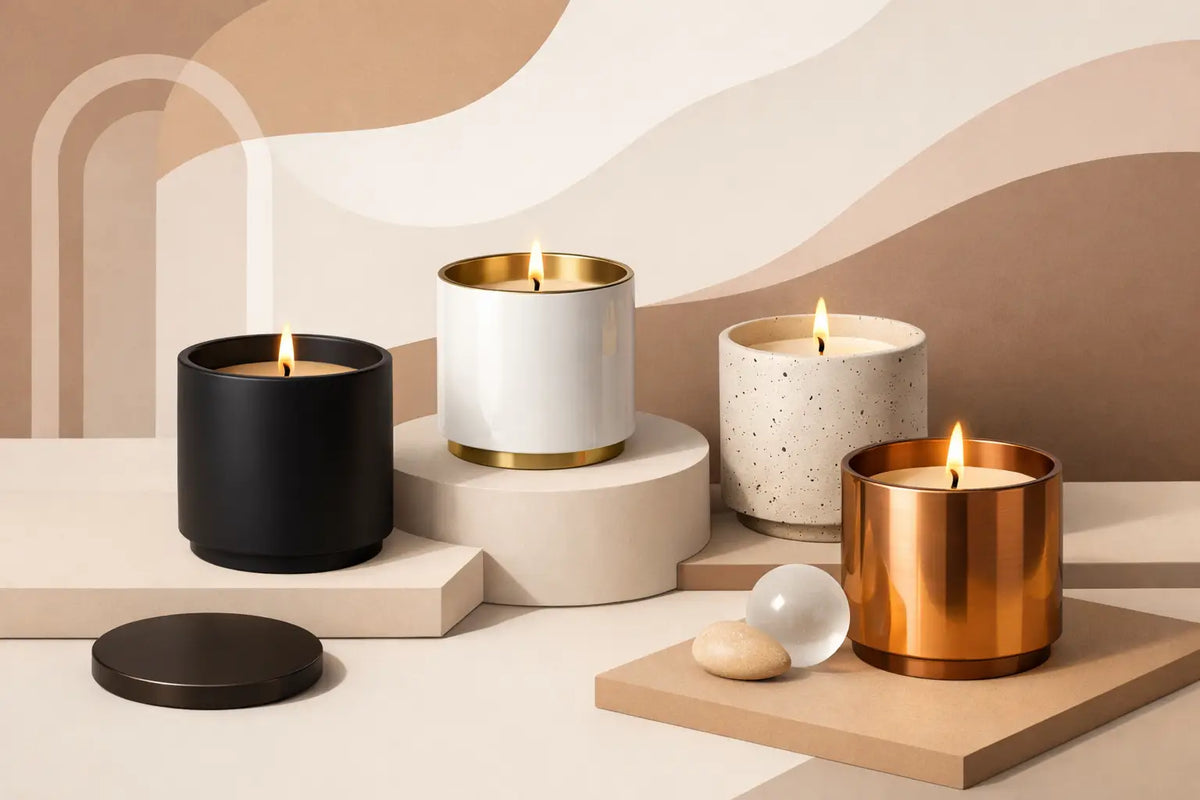
A faceted or sculptural vessel already carries visual weight. It often needs packaging that is quieter and more architectural, allowing the form to feel like the focal point. A simple cylindrical jar can support more expressive graphics, color, or a tactile label treatment. Matte vessels tend to pair naturally with uncoated papers and soft, low-shine finishes. Glossy glass can carry sharper contrast and more polished details.
Do not overlook lid presentation. A wood lid, metal lid, or sculptural cap changes the product’s visual center of gravity. Make sure your box depth accounts for it without creating too much empty space. If the lid is a key part of the collection’s identity, consider whether it should be visible in product photography and repeated through a matching closure detail on the package.
Dream Vessels approaches vessel sourcing as a brand-building decision for precisely this reason. A coordinated collection of forms, finishes, and fragrance formats gives founders a stronger foundation for packaging that feels connected rather than assembled over time.
Design the Unboxing in a Clear Sequence
An effective unboxing does not need a flood of extras. It needs a purposeful order.
When customers open the outer box, they should see a clean first layer: tissue, a branded seal, or a concise card. Beneath it, the candle should be secure and easy to lift out. Once they reach the product box, the scent name, fragrance notes, and essential candle-care information should be easy to find.
This sequence matters because it reduces friction. Customers should not need to hunt for burn instructions or pull apart multiple tightly packed materials to access the product. A beautiful package that feels difficult to open can undermine the thoughtfulness of the presentation.
Include practical information where it belongs. A small insert can communicate trimming, first-burn, and safety guidance, while the bottom label can cover net weight and other necessary product details. Keep the design language consistent, but do not force every piece of information onto the front label. Breathing room is part of premium presentation.
Make Giftability Part of the Plan
Many Etsy candle orders are gifts, even when the buyer does not select a formal gift option. Packaging that arrives polished and ready to give can become a quiet reason for customers to choose your brand again.
This does not mean every order needs ribbon or a handwritten note. It means the product should look complete when the shipping materials come away. A sturdy product box, an intact label, and a refined final presentation signal that the candle is ready for a counter, mantel, or gift table.
If you offer gift messaging, keep the operational process simple. Use a standardized card size and a designated place within the package so gift notes do not get lost among protective materials. For seasonal launches, a limited color accent or seal can create occasion without forcing you to redesign the entire system.
Build for Repeat Orders, Not Just First Impressions
The strongest packaging for an Etsy candle business is repeatable. It should be easy for you or a small fulfillment team to assemble accurately during a busy launch, and it should remain consistent as order volume grows.
Document the process. Photograph each packing layer, record the material quantities, and note the exact box sizes used for each vessel format. This protects consistency when you bring on help or pack a larger batch of orders. It also reveals waste. If every package requires excessive filler or takes several minutes to assemble, the system needs refinement.
Your package is one of the few brand touchpoints customers can touch, keep, photograph, and remember. Give it the same level of intention as the candle inside. When the vessel, carton, protective materials, and final reveal speak the same visual language, your order arrives as more than a handmade product. It arrives as a brand with a point of view.