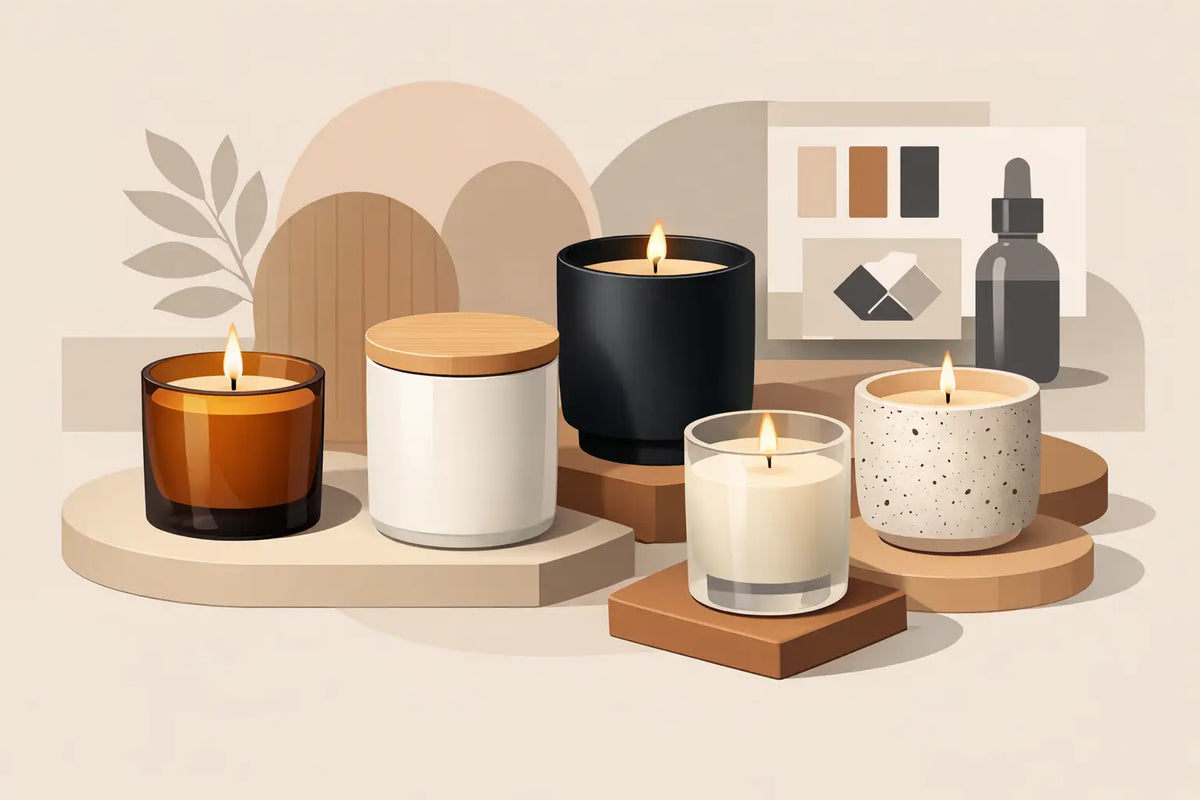
Best Candle Vessels for Branding Your Line
A customer can feel the position of your candle before they read the scent name, lift the lid, or strike a match. They see the silhouette on a shelf, the weight of the glass in their hand, and the way the finish catches light. That is why choosing the best candle vessels for branding is not a late-stage packaging decision. It is one of the first decisions in building a product people recognize.
For fragrance founders, the vessel is where a scent concept becomes a physical brand asset. A polished amber jar can suggest apothecary warmth. A low, sculptural tumbler can feel architectural and modern. A matte black vessel can establish restraint, drama, or a more masculine point of view. None is universally better. The right choice is the one that makes your customer understand your world at a glance.
What Makes a Candle Vessel Work for Branding?
The strongest vessel choices create a clear relationship between form, finish, fragrance, and price point. They do not ask the label to do all the work. When the base object already feels considered, every other detail - the wax color, lid, label stock, carton, and photography - has a more confident foundation.
Start with the brand impression you want to own. A soft, rounded vessel feels approachable and home-centered. Straight walls and crisp edges create a cleaner, more editorial expression. Larger formats imply generosity and permanence, while petite vessels can feel giftable, collectible, or ideal for discovery sets. The vessel should support the role the candle plays in your assortment, not simply hold the wax.
A vessel also needs to feel credible at your intended retail price. If your ambition is a premium candle line, lightweight glass with an overly familiar shape may create friction, even with excellent fragrance. Conversely, an elaborate or heavy vessel can pressure your margins if your customer expects an accessible everyday candle. Good branding is not only visual. It is the alignment between what your product promises and what it can sustain commercially.
Choose a Form Before You Choose a Color
Color often gets the attention first, but form has the longer visual life. A collection can shift from warm neutrals to jewel tones season after season while retaining recognition through a consistent silhouette. That makes shape a powerful anchor for brands planning beyond a single launch.
Straight-sided jars: clean and adaptable
Straight-sided glass vessels are a strong choice for founders who want flexibility. Their quiet geometry gives labels room to perform, photographs cleanly, and works across a wide range of fragrance stories. In clear, white, black, or amber glass, the same foundational form can support a restrained core collection and more expressive limited releases.
This is often the right direction for brands that want the scent name, illustration, or label system to be the visual lead. The trade-off is that a common form requires more intention elsewhere. Your finish, lid, label proportions, and color system need to create the distinction.
Rounded forms: soft, intimate, and giftable
Curved or softly tapered vessels communicate a different kind of value. They can feel warm, tactile, and personal - especially when paired with creamy wax, tonal labels, or brushed metal lids. These forms suit brands centered on comfort, ritual, hosting, or gentle everyday luxury.
The practical consideration is label application. Curved surfaces may limit label size or require more careful placement, so test your graphics on the actual vessel before committing to a full identity system. A beautiful label layout on screen can lose its balance once it follows a taper.
Low, wide vessels: modern and architectural
Low, wide candle vessels make a statement quickly. Their proportions can feel substantial, design-led, and well suited to coffee tables, open shelving, and styled interiors. They are particularly effective for elevated signature scents or larger-format candles intended to stay visible in a room.
They also ask more of the product development process. A wider diameter usually changes your wick strategy and may require a multi-wick format. That can create a more dramatic burn and stronger visual presence, but it increases material cost and testing complexity. Use this silhouette when the larger experience is central to your brand, not simply because it looks impressive in a product photo.
Finish Sets the Emotional Temperature
Once the form is right, finish determines how your collection enters a room. Think of it as the vessel's emotional temperature.
Clear glass is honest and versatile. It allows wax, flame, and label design to share the stage, making it useful for clean, botanical, or color-conscious brands. Amber glass introduces instant warmth and a subtle apothecary reference. It is familiar, but it can still feel elevated when paired with a contemporary label system and a well-chosen closure.
Opaque white glass feels fresh, minimal, and bright. It creates a calm canvas for tonal branding or bold graphic contrast. Black glass is more directional. It can feel luxurious, moody, or highly modern, depending on whether the remaining components are matte, glossy, metallic, or paper-forward.
Matte finishes deserve special attention because they change touch as much as appearance. They absorb light rather than reflect it, giving the product a quieter, more tactile presence. They can make a simple form feel more premium, though they may show dust, fingerprints, or handling marks differently than glossy glass. Consider how your candle will live in retail, shipping, and a customer's home - not just in a styled launch image.
Build a Collection, Not a Row of Individual Products
The most memorable candle brands rarely rely on one beautiful vessel. They create a system. Customers should be able to see a three-scent lineup, a holiday release, and a new diffuser format and understand that they belong together.
Begin with one hero vessel for your core candle range. Then identify companion formats that preserve the same design language: a smaller travel size, a larger statement candle, a reed diffuser bottle, or a coordinating room spray. The pieces do not need to match perfectly. In fact, exact matching can feel flat. They need shared cues, such as a repeated finish, a related profile, consistent cap color, or a disciplined palette.
This is where collection-based sourcing becomes especially useful. Dream Vessels approaches components as an assortment, helping founders consider candle vessels, diffuser containers, packaging, and accessories as parts of one visual retail story. That approach prevents a common early-stage problem: a beautiful candle that sits beside a completely unrelated diffuser because each item was selected in isolation.
For a first collection, restraint is usually stronger than variety. Choose one or two vessel finishes and let scent names, labels, and secondary packaging create movement. Too many colors or shapes can make a small line feel unedited. A concise palette looks intentional, is easier to photograph, and gives customers a clearer reason to collect more than one scent.
The Best Candle Vessels for Branding Must Also Perform
A vessel that photographs beautifully but creates production headaches is not a brand-building choice. Before finalizing a format, assess the realities behind the presentation: fill volume, wax compatibility, wick performance, lid fit, label area, shipping weight, and reorder availability.
Every vessel and wax combination requires burn testing. Diameter, interior coating, fragrance load, wax type, and wick selection all influence melt pool, flame behavior, and glass temperature. Do not assume that a wick formula used in one jar will transfer cleanly to another, even if the capacities seem similar. Test the finished product with your intended fragrance and production method.
Consider the customer's after-use experience, too. A vessel with a generous opening may be easier to clean and repurpose. A lid can add perceived value, protect the wax from dust, and make the candle feel more gift-ready. These details influence whether your product becomes part of a customer's home or disappears after the burn.
Supply planning matters as much as aesthetics when a scent starts selling. Select a vessel you can imagine ordering again with confidence, then set your label dimensions and carton specifications around it. Changing a hero vessel midseason can disrupt photography, packaging, inventory, and customer recognition. Permanent forms create room for creative evolution.
Let the Vessel Carry Its Share of the Story
The best branding does not depend on adding more. It comes from making a few decisions that belong together: a silhouette with a point of view, a finish that supports your mood, and a product family that looks composed on a shelf.
Choose the vessel your customer would want to keep in view after the candle is gone. That is the standard worth designing toward.