How to Select Candle Lids for a Premium Brand
A candle lid is often the final component added to the product, yet it is one of the first details a customer sees. Learning how to select candle lids is not simply a matter of covering wax. The right lid completes the vessel’s silhouette, protects the fragrance between burns, and signals the level of care behind your brand.
For a founder building a considered collection, the question is not, “What lid fits?” It is, “What lid makes this candle feel finished?” The answer sits at the intersection of proportion, material, function, and merchandising.
Start With the Vessel, Not the Lid
A lid should feel like it belongs to the vessel rather than being added as an afterthought. Begin with the vessel’s opening diameter, exterior diameter, rim shape, and overall height. A low, wide tumbler may call for a clean flat lid that preserves its architectural profile. A taller statement vessel can carry a more dimensional lid without looking top-heavy.
Fit is non-negotiable, but visual proportion deserves the same attention. A lid that is technically compatible can still look undersized, bulky, or disconnected from the vessel finish. Request samples whenever possible and assess the complete form from eye level, above, and in the hand. The product should have a composed, intentional presence from every angle.
Also account for normal manufacturing variation. Glass vessels may have slight dimensional differences from one production run to another, while wood and metal lids can have their own tolerances. Test several vessels, not just one sample, before committing to packaging at scale.
Choose a Lid Style That Supports Your Brand Positioning
Different lid materials communicate different things before a customer reads a label. The strongest choice reflects the visual language of your collection and the experience you want to create at home.
Wood lids bring warmth and material contrast
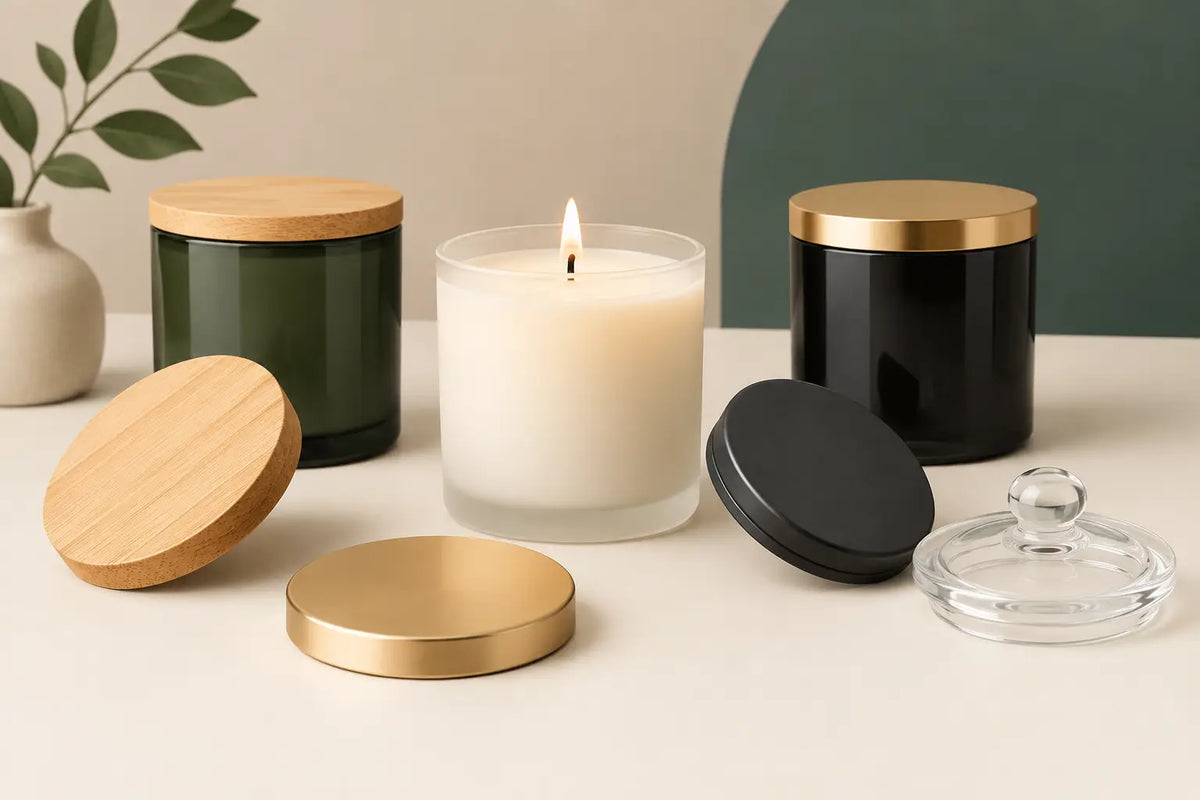
Wood lids work especially well for fragrance brands built around natural textures, quiet luxury, or warm neutral palettes. They introduce tactile contrast against smooth glass and can soften a glossy or richly colored vessel. Light wood feels airy and organic; darker stains bring more depth and a slightly more formal mood.
Wood does require attention to consistency. Grain, tone, and subtle surface variation are part of its appeal, but they may not suit a brand seeking a perfectly uniform, high-gloss presentation. Consider how the wood tone will sit beside your label stock, carton, and photography surfaces.
Metal lids create a polished, modern finish
Metal lids offer a more streamlined direction. Black, gold, silver, and tonal finishes can make a collection feel graphic, editorial, or distinctly giftable. A matte black lid paired with smoked glass can feel restrained and architectural. A brushed gold finish can elevate a soft cream vessel into something more celebratory.
The trade-off is that metal reflects its surroundings more readily than wood. Fingerprints, scratches, and finish inconsistencies can be more visible on certain surfaces, especially glossy dark finishes. If your candles will be handled often in retail settings, consider a finish that is forgiving while still aligned with the collection.
Glass lids feel refined but require thoughtful handling
Glass lids can create a tonal, sculptural look when paired with a matching vessel. They are a strong option for elevated home fragrance lines where the candle is designed to live on a coffee table, vanity, or open shelf. Their visual payoff is substantial, particularly when the vessel itself has a distinctive color or texture.
However, glass adds weight and breakage considerations during shipping. It may also be less practical for a high-volume market or a collection built around portability. Beautiful packaging is only successful when it can arrive beautifully.
How to Select Candle Lids for Function
A lid protects the candle from dust and helps preserve its scent when the candle is not in use. It also gives customers a clean, composed way to store the product between burns. But a lid is not a seal unless it has been specifically designed and tested as one. Do not position a standard candle lid as leakproof or airtight without verifying that performance.
The interior fit matters as much as the exterior look. Some lids rest over the vessel rim, while others use an inset gasket or inner lip to create a more secure hold. A lid that is too loose can feel inexpensive and shift during transit. One that is too tight can frustrate the customer or create unnecessary pressure on a glass rim.
Keep in mind that lids are for storage, not for extinguishing a flame unless the lid and candle system have been designed and safety-tested for that purpose. Clear care instructions protect both the customer experience and your product presentation. A small instruction card or bottom label can communicate this without interrupting the design.
Build a Cohesive Component System
The most compelling fragrance brands do not make packaging choices one product at a time. They create systems. A candle lid can become a visual thread connecting multiple vessel sizes, seasonal colorways, or adjacent categories such as reed diffusers and room sprays.
For example, a core collection might use matte black lids across white, amber, and charcoal glass. The vessels change, but the lid becomes a recognizable signature. Or, a warm wood lid might pair with a family of oat, clay, and olive vessels, creating a grounded palette that feels collected rather than repetitive.
This approach also makes merchandising easier. Products photograph together with less styling effort, shelves feel more intentional, and customers can recognize your line across different fragrances. At Dream Vessels, this is the value of sourcing with the whole collection in mind: form, finish, and packaging should support one another.
Consider Labels, Boxes, and Unboxing
Your lid does not exist in isolation. It should work with the label shape, typography, carton color, closure sticker, and shipping protection. A low-profile lid may leave more visual space for a tall front label. A more substantial lid may shift attention upward, making a small label feel underpowered.
Think about the moment a customer removes the candle from its box. Does the lid reinforce the promise on the exterior packaging? A sleek monochrome carton paired with an unfinished-looking lid creates a disconnect. Conversely, a simple vessel can feel remarkably premium when the lid, label, and box share a deliberate finish language.
If you offer gift sets, consider whether the lid can carry a small branded detail, such as a top label, a printed seal, or a carefully placed scent name. These additions are not always necessary. Often, restraint is the more elevated choice. The key is deciding which surface should do the visual work.
Test the Real Customer Experience
Before placing a larger order, test your candle as it will actually be sold. Pack it in its finished box. Ship it to yourself. Open it after a few days, then repeat after a few weeks. Handle the lid with wax residue on your fingers. Photograph it in daylight and low evening light. Place it next to other products in the collection.
Pay attention to small signals. Does the lid lift easily? Does it sit level? Does it scratch the vessel? Does it make the candle feel heavier, more giftable, or more expensive? These details shape perceived value long before the first burn.
Price matters, especially for a growing brand, but the least expensive lid can become costly if it compromises the candle’s finish or creates packaging issues. A more considered component may allow you to price with greater confidence, improve repeat purchase appeal, and build a visual identity customers remember.
Choose the lid that makes your candle feel complete, then let that decision guide the rest of the collection. You are not just covering wax. You are creating the final line of a product your customer will want to keep in view.