A Candle Vessel Review for Brand-Building Founders
A candle vessel review should begin before wax, wick, or fragrance enter the conversation. The container is often the first physical cue a customer receives about your brand: its price point, point of view, and place in their home. A beautiful scent in a generic vessel can feel unfinished. A considered form can make even a small first collection feel established.
For founders building a candle line, the right vessel is not simply one that holds wax safely. It is a design decision with practical consequences. Its silhouette affects shelf presence. Its finish changes how color and labels read. Its dimensions influence wick testing, fill weight, shipping, and perceived value. The strongest choice is where all of those considerations meet.
A Candle Vessel Review Starts With the Brand, Not the SKU
It is tempting to choose a vessel by asking, “What is selling?” That question can be useful, but it is not enough. A vessel that performs well for a rustic market brand may not support a restrained, architectural home fragrance line. Trends move quickly. Permanent forms tend to have a longer life.
Start with the visual language your customer should recognize without seeing your logo. Is the brand warm and tonal, with soft neutrals and layered textures? Is it graphic, high contrast, and modern? Does it belong on a marble vanity, a bedside table, or in a sunlit kitchen? A vessel should answer those questions at a glance.
Consider the difference between a low, wide tumbler and a tall straight-sided jar. The tumbler feels grounded, relaxed, and generous. It can make a candle read as giftable and substantial, even at a moderate fill weight. A taller form creates a more vertical presence and often feels cleaner or more editorial. Neither is inherently better. The right decision depends on the world your product is meant to occupy.
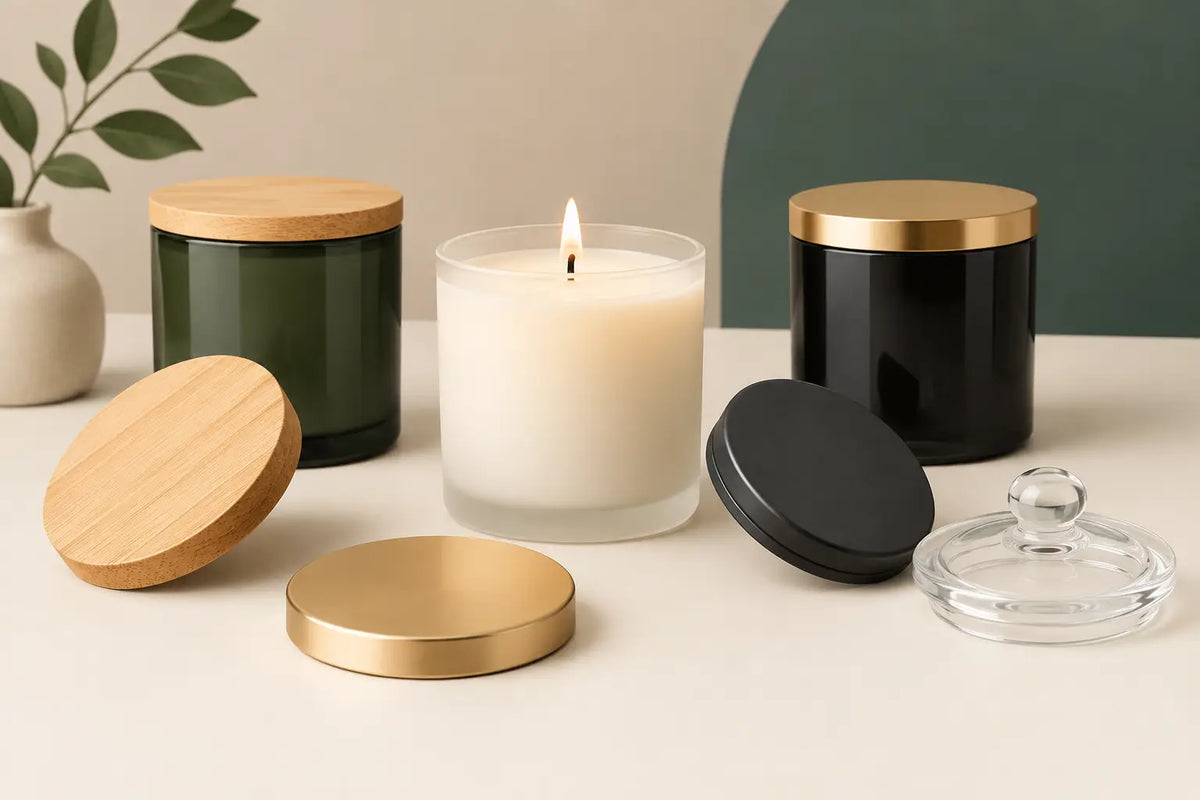
Color deserves the same level of intention. Matte black brings depth and contrast, but it can obscure the wax line and make a small label disappear. Frosted glass softens the flame and gives a candle an ambient quality, while clear glass places the wax color and interior finish on display. Metallic finishes can signal occasion and luxury, though they may require more restraint elsewhere in the package. A vessel is part of the palette, not just the package.
Review Form, Finish, and Scale Together
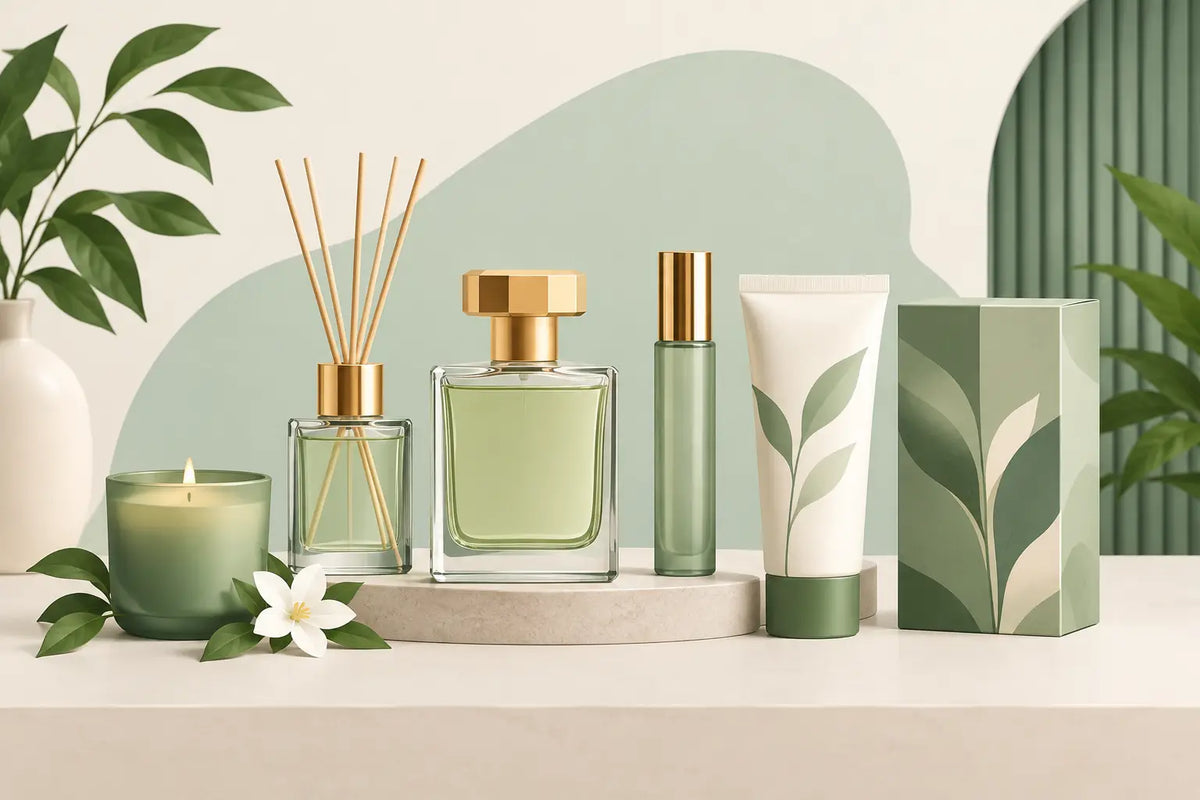
A candle vessel can look striking in isolation and still fail as part of a collection. Review it in context with the elements that will surround it: label, lid, carton, matchbox, diffuser bottle, and photography background. This is where a single product choice becomes a merchandising system.
Form is the foundation. Look at the mouth opening, the shoulder, the base, and the relationship between height and diameter. Wide openings provide an expansive wax surface and can create a more immediate fragrance experience, but they may require multiple wicks and more careful burn testing. Narrower vessels can feel refined and save shelf space, though they may limit label real estate or make the candle appear smaller than its actual fill weight.
Finish is where light changes the object. Glossy vessels reflect their environment and often feel polished, but fingerprints and glare can be more noticeable in product photography. Matte finishes have a quieter, more tactile effect. They photograph beautifully in many settings, yet their surface can show scuffs during handling if the packaging does not protect them well. Frosted and translucent finishes create softness, especially when the candle is lit, but label opacity and adhesive selection should be tested before committing to production.
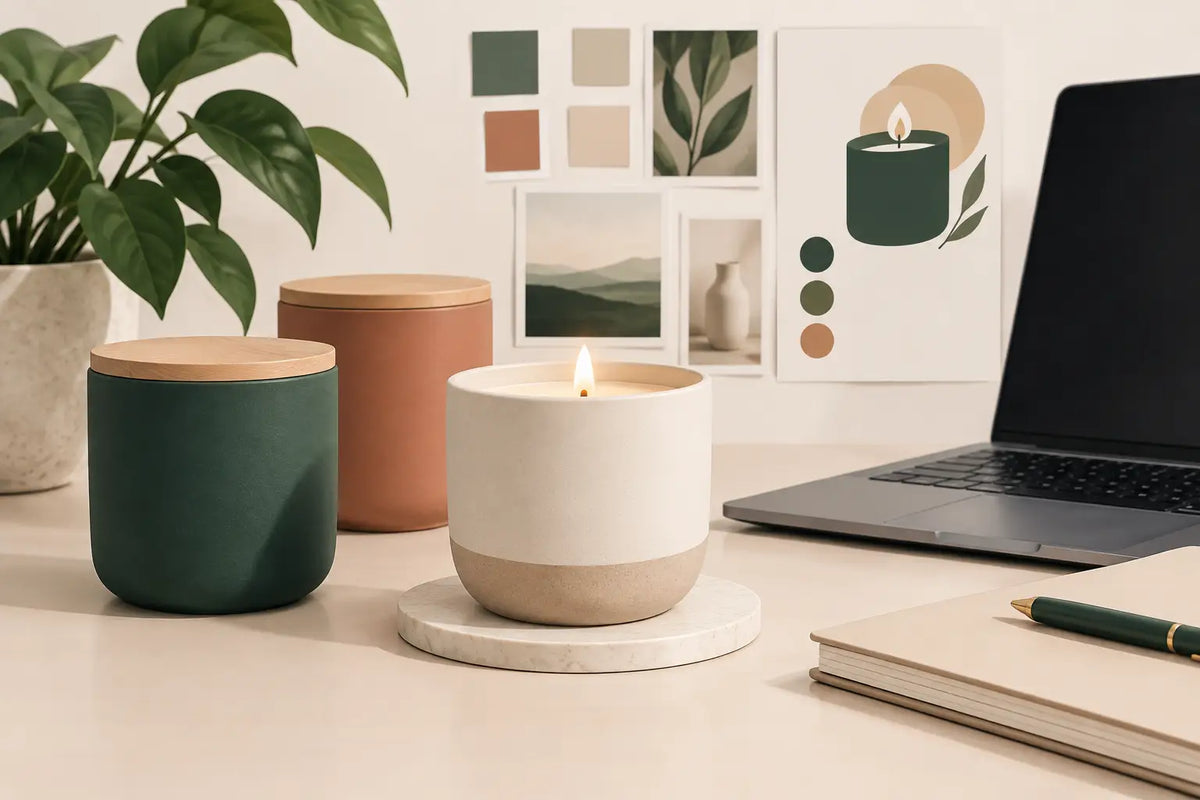
Scale is equally strategic. Do not judge size only by ounces. Hold the vessel, place it beside a book, photograph it in a styled setting, and compare it to the products you expect customers to purchase alongside it. A 9-ounce candle can feel premium or undersized depending on the diameter, height, label proportion, and lid.
A useful review asks whether the vessel has visual weight. Does it feel substantial in hand? Does its base look stable? Does the opening create an appealing view of the wax? These details shape perceived value long before a customer reaches the checkout page.
Performance Must Support the Presentation
A vessel cannot be selected purely for aesthetics. Glass thickness, interior diameter, fill line, and opening size all affect the testing process. A thoughtful candle vessel review gives performance the same attention as finish.
The vessel’s internal diameter is particularly significant because it guides wick selection and melt pool behavior. A wider container may need two or more wicks to burn evenly. That can create a beautiful, luminous effect, but it also increases material cost and introduces more testing variables. A single-wick vessel may simplify production, yet it needs enough diameter and heat balance to avoid tunneling.
Leave room for the wax surface to breathe. An overly high fill line can look crowded, especially once a lid is added. It also gives less margin for handling, transport, and the natural movement of wax during pouring. A little negative space at the top can make the candle feel more composed, not less full.
If you plan to offer lids, review the full pairing rather than treating the lid as an afterthought. The fit should feel deliberate, and the proportions should make sense when the candle is closed. A lid can elevate a simple vessel into a finished object, protect the surface between burns, and create a more polished unboxing experience. It can also add cost, shipping weight, and storage complexity. For some brands, a carton or dust cover delivers the needed finish with a lighter operational footprint.
Never assume that a vessel used successfully by another maker will perform identically with your formula. Wax blend, fragrance load, dye, wick series, room conditions, and burn habits all change the result. Test the specific combination you intend to sell. The vessel sets the stage, but the full system determines the experience.
Look Beyond the Candle Itself
The most commercially useful vessel is often one that gives your line room to grow. Before choosing, consider whether its finish and proportions can work across seasonal fragrances, limited releases, and core scents. A highly specific color may be perfect for a holiday edition but restrictive for a year-round signature collection.
This is also where coordinated formats matter. If you plan to expand into reed diffusers, room sprays, car diffusers, or refills, look for a shared visual thread rather than forcing every category into an exact match. Similar tones, repeated materials, complementary silhouettes, or consistent label architecture can create cohesion without making every product look identical.
Think about the retailer or market table, too. A collection of vessels in one disciplined shape can look confident and recognizable. A mix of unrelated jars, lids, and label sizes can make even excellent fragrances feel improvised. Variety has a place, especially for seasonal storytelling, but it works best when a clear foundation is already in place.
Questions Worth Asking Before You Commit
Before ordering deeply, ask whether the vessel supports your intended price point, photographs well in your brand environment, and leaves enough room for a readable label. Ask whether the finish will stay attractive through packing and fulfillment, whether the available inventory supports your launch cadence, and whether the form can carry future scent stories.
Then order samples and live with them. Pour a test candle. Apply the actual label. Put it in the room where your customer might place it. Photograph it in daylight and low light. Gift it to someone with a discerning eye and watch what they notice first. The answer is often more revealing than a supplier spec sheet.
A vessel should make your fragrance feel more specific, not merely more contained. Choose the form that gives your customer a reason to keep the object in view long after the final burn.