Coconut Wax Versus Soy Wax: Which Fits Your Brand?
A candle’s wax is not just a production decision. It influences the surface your customer sees when they remove the lid, the fragrance experience they remember, the price architecture your collection can support, and the story behind the product. For founders comparing coconut wax versus soy wax, the right answer is rarely about which wax is universally better. It is about which material best supports the candle you want your brand to become known for.
Soy has earned its place as a familiar, accessible plant-based option. Coconut wax is often chosen for a more elevated burn and finish, particularly in premium vessel candles. Both can create beautiful products. The distinction appears in the details: formulation, performance testing, visual standards, sourcing, and positioning.
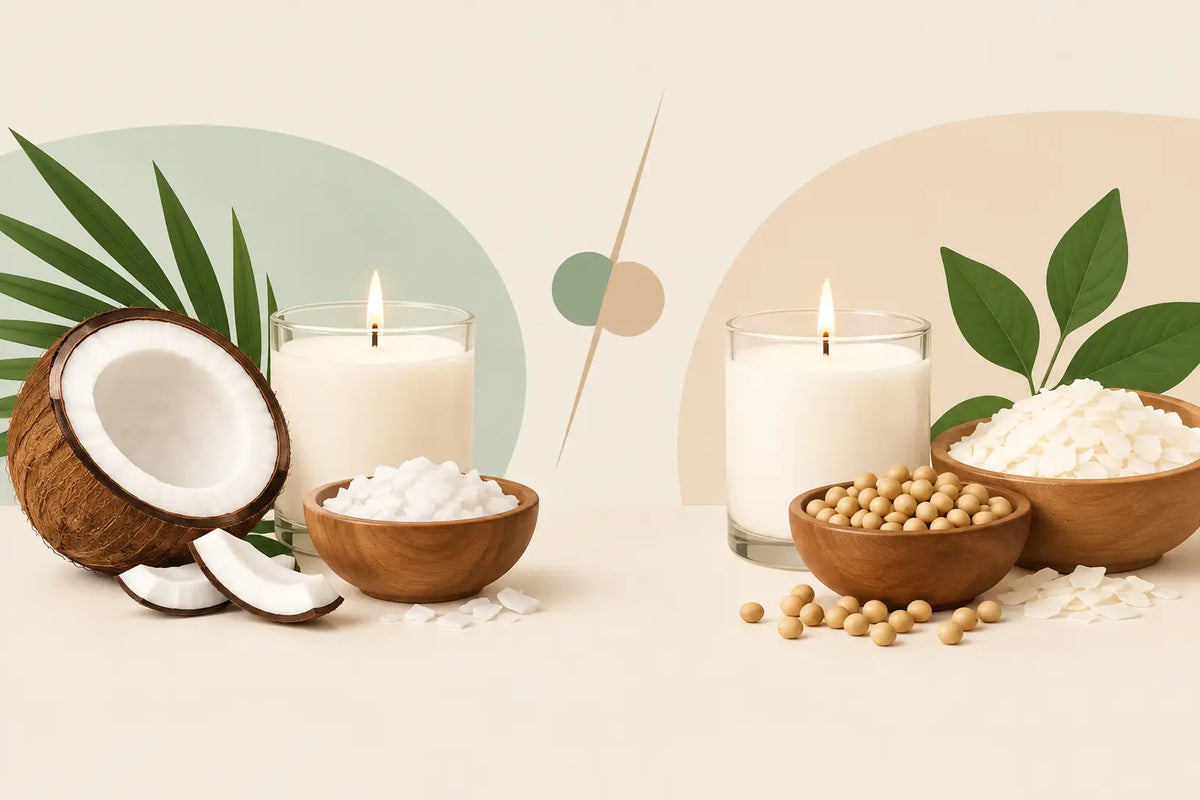
Coconut Wax Versus Soy Wax at a Glance
Soy wax is typically made from hydrogenated soybean oil. It is widely available, broadly understood by consumers, and commonly used in container candles at many price points. Its accessibility makes it a practical starting point for new makers, especially those developing their first tested fragrance lineup.
Coconut wax is derived from coconut oil, but most candle-ready coconut waxes are proprietary blends rather than a single-ingredient material. They may include other vegetable waxes, such as soy, apricot, or palm-derived components, to create a stable wax with reliable burning and adhesion. That distinction matters. A coconut blend and a coconut apricot blend may perform differently, even if both are positioned as premium plant-based waxes.
Neither label replaces testing. Your fragrance load, wick, vessel diameter, dye, room temperature, cure time, and pouring process all shape the final candle. Think of wax as the foundation of the composition, not the finished design.
The Finish: Where the Difference Becomes Visible
For a design-led candle brand, appearance is part of the product promise. A customer may not know the technical language for frosting or wet spots, but they recognize a candle that looks considered.
Soy wax can develop frosting, a crystalline white haze that is especially visible in colored candles and against dark or translucent glass. It may also pull slightly from the vessel as temperatures change. These traits are normal for natural waxes, but they can conflict with a highly polished visual direction when not managed through testing and process control.
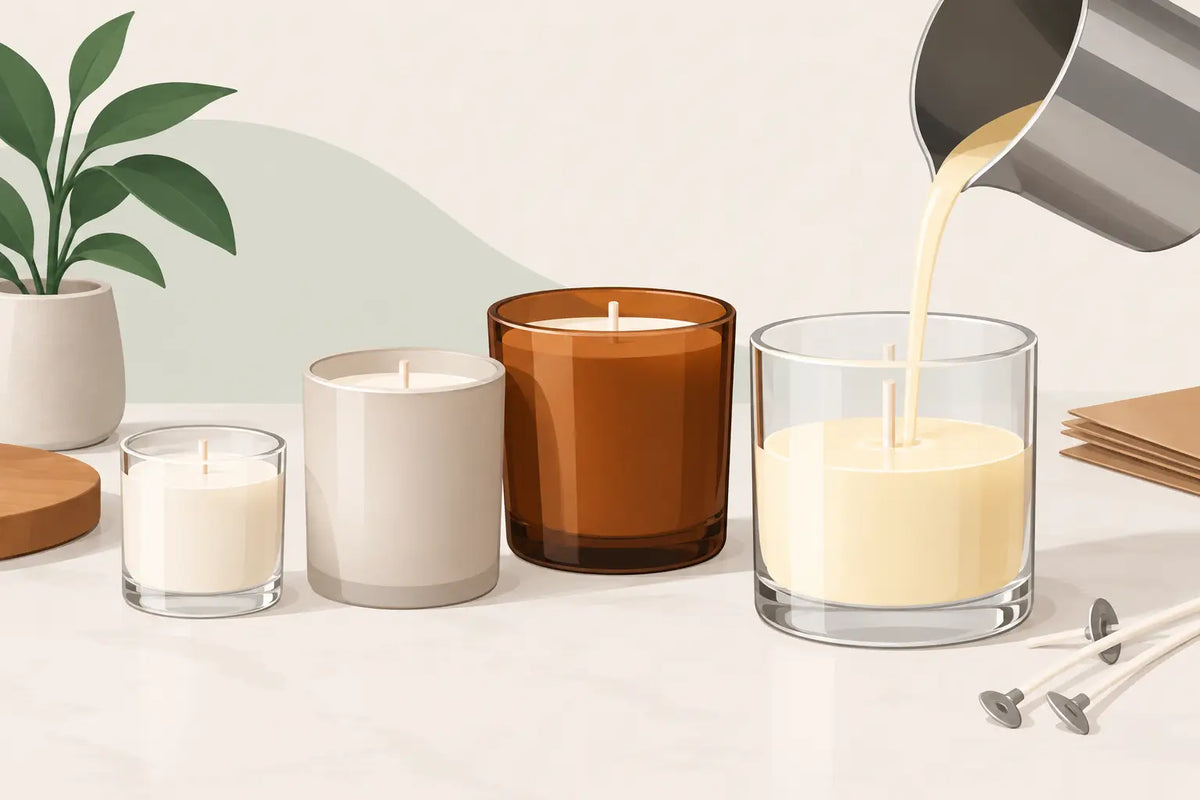
Coconut wax blends are often selected for their creamy, smooth appearance and strong glass adhesion. In an open vessel, that soft, refined surface can reinforce a premium presentation before the candle is ever lit. This is one reason coconut-based blends pair so naturally with minimalist vessels, tonal palettes, and collections where finish carries as much weight as fragrance.
That said, coconut wax is not immune to imperfections. A flawed pour, incompatible fragrance oil, rushed cooling cycle, or mismatched wick can still create sinkholes, uneven tops, or adhesion issues. Premium materials deserve premium process. Test in the exact vessel, finish, and fill weight you plan to sell.
A note on color and vessel choice
If your line relies on richly dyed wax, transparent glass, or a crisp white wax surface, visual testing should be a central part of development. Soy may require more acceptance of natural variation. Coconut blends can offer a more uniform look, but the vessel’s color, opacity, and interior coating can also do substantial design work.
An opaque matte vessel, for example, can make minor wax variation far less visible while creating a more architectural shelf presence. The right vessel does not simply contain the formula. It can support it.
Scent Throw and Burn Performance
Scent throw is often the deciding factor in wax conversations, yet it is one of the most oversimplified claims in candle making. Coconut wax blends are frequently praised for strong cold throw and hot throw, along with a slow, even burn. Many makers find them especially effective for nuanced fragrance profiles where top, heart, and base notes need room to develop.
Soy can also produce excellent scent performance. But it may require more deliberate wick selection, fragrance testing, and curing discipline to achieve the same result across every scent family. Citrus, florals, gourmands, woods, and high-vanillin blends do not behave alike. A wax that performs beautifully with amber and sandalwood may need adjustments for fresh linen or bergamot.
Coconut wax tends to have a lower melt point and a softer texture than many soy waxes. This can support a luxurious melt pool and a slower burn, but it also means warm-weather shipping and storage deserve attention. If your brand sells heavily during summer or ships across hot regions, test candles through realistic transit conditions. A beautifully burning candle that arrives soft, sweating, or pulled from the glass is not a premium customer experience.
Soy generally offers a little more structural firmness, depending on the formula. That can be useful for brands that prioritize a straightforward production rhythm or need a wax with more heat tolerance. Again, the specific blend matters more than the broad category alone.
Cost, Scale, and Collection Pricing
Soy wax is usually the more economical option. It is common, relatively easy to source, and familiar to suppliers and consumers. For an early-stage founder, that lower material cost can leave more room for testing, photography, packaging, and the essential but often overlooked expenses of building a cohesive launch.
Coconut wax blends generally cost more. The raw material expense may raise your cost per candle, and the wax can require a more intentional testing process. That higher cost is not automatically justified by a premium retail price. The surrounding product has to support it: the vessel weight, label stock, fragrance quality, packaging, product photography, and brand story all need to feel aligned.
This is where product architecture matters. A coconut wax candle in a considered vessel can help establish a higher-value collection, especially when your customer is buying a gift, a visual object, or a small ritual for their home. But if your audience is highly price-sensitive or your business model depends on promotional volume, soy may create a healthier margin structure.
Do not select coconut wax solely because it sounds more luxurious, and do not select soy solely because it is less expensive. Choose the wax that allows you to consistently deliver the experience represented by your retail price.
Sustainability Claims Need Precision
Both waxes are commonly marketed as natural or plant-based, but responsible brand language should be more specific than a front-label shorthand. Soy is tied to agriculture, land use, processing, and supply-chain questions. Coconut wax has its own sourcing and traceability considerations, particularly because coconut-based candle wax is often blended with other ingredients.
Avoid broad claims such as “eco-friendly” unless you can substantiate them across the product and packaging system. Instead, describe what you know: plant-based wax blend, renewable-source ingredients where applicable, reusable vessel, recyclable outer packaging, or a specific supplier certification if you have verified it.
Customers increasingly notice the gap between a candle’s aesthetic story and its material story. Clear, accurate language builds more trust than oversized sustainability claims.
How to Choose the Right Wax for Your Candle Line
Start with the position you want to occupy, then work backward into testing. If you are creating a refined, giftable collection with creamy wax surfaces, complex fragrance, and design-forward vessels, a coconut-based blend may be worth the added investment. It can support a more elevated sensory and visual experience when paired with the right formula.
If you are launching a foundational collection, working within a disciplined materials budget, or building a brand around the recognizable familiarity of soy, soy wax can be the smarter choice. It remains a credible material for premium candles when the fragrance, vessel, and finishing are well resolved.
For many founders, the best development process is to test both. Use one vessel style, one fill weight, and a small set of fragrances across distinct families. Compare cold throw after cure, hot throw in a standardized room, burn pool development, glass adhesion, top appearance, wick behavior, and cost per finished unit. Document the results rather than relying on a single first impression.
The decision becomes clearer when you see the wax in the product, not just in the spec sheet. A warm ivory coconut blend may be exactly right for a sculptural smoked-glass collection. A clean soy formula may be the better fit for an accessible everyday candle range with a broad seasonal scent menu.
Your wax should make the rest of the collection feel more intentional. Choose the material that supports the finish, fragrance, vessel, and price point you can stand behind long after launch day.